
Pig Bladders, Tin Tubes and Text Prompts
What Creative Leaders Can Learn from History to Navigate AI with Confidence
For Creative Directors, CMOs, and Design Leads navigating AI-driven disruption, this article offers a strategic lens on how past technological shifts reshaped creative work—and how to turn today’s AI moment into a competitive advantage. You’ll walk away with a clearer framework for evaluating emerging tools, a historical perspective to guide decision-making, and a practical playbook for leading creative teams in the age of AI.
Creative leaders aren’t being replaced by AI. They’re being replaced by leaders who know how to use it strategically.
Has there ever been this kind of disruption before? Was there a comparable technological leap—and how did creative leaders respond? More importantly, what were the lessons then, and how should today’s leadership teams approach content, design, and workflow in a fast-moving AI and Large Language Model (LLM) environment?
These questions are at the center of nearly every executive creative conversation right now. AI is moving quickly—reshaping workflows, compressing timelines, challenging production models, and redefining what creativity is and who participates in it. Some leaders see opportunity. Others see risk.
The difference will be determined by how we frame and deploy the technology. The teams that win won’t be the ones producing more content. They’ll be the ones producing better thinking per hour. The biggest mistake creative leaders are making right now? Using AI to produce more content instead of better thinking.
In every era, similar themes determine how creatives interact with new tools:
Portability: Does it travel? Can it be used anywhere?
Scalability: Can it expand access and output?
Democratization: Is it usable beyond specialists? Can anyone use it?
Using these parameters, I went searching for a past technological leap that didn’t just change tools—but fundamentally changed creative behavior. I landed in Washington D.C.,1841.
Three presidents occupied the Oval Office in the first few months of the year; outgoing Martin Van Buren, William Henry Harrison (who didn’t wear an overcoat during his two-hour inaugural address), and his VP, John Tyler. The first telegraph line was established, stretching from Washington to Baltimore, and arriving at the B&O Railroad depot after a 3-day journey from Henniker, New Hampshire, a struggling portrait painter and inventor named John Goffe Rand. Rand had an idea that would revolutionize the art world. His first stop was the United States Patent Office.
Painting Was Once a Manufacturing Job
Since the 1600s, artists would spend hours grinding pigments and mixing oils—repetitive production work that had to happen before the real creative work could start.
Eventually, the market produced a solution, the “colorman.” Colormen premixed pigments and sold ready-made paint in pig bladders. Artists purchased a swollen bladder for each color and had to puncture them in order to squeeze pigment onto a palette.

It was an early form of outsourcing. It bought time. But it introduced new constraints.
Pig bladders were fragile and messy. They weren’t airtight, so the paint oxidized quickly, wasting resources. The bundles of bladders made outdoor painting was nearly impossible, so artists stayed anchored to their studios.
Frustrated by waste and inefficiency—and sensing opportunity—Rand conceived of a solution: premixed paint stored in collapsible tin tubes, sealed with an airtight screw cap.
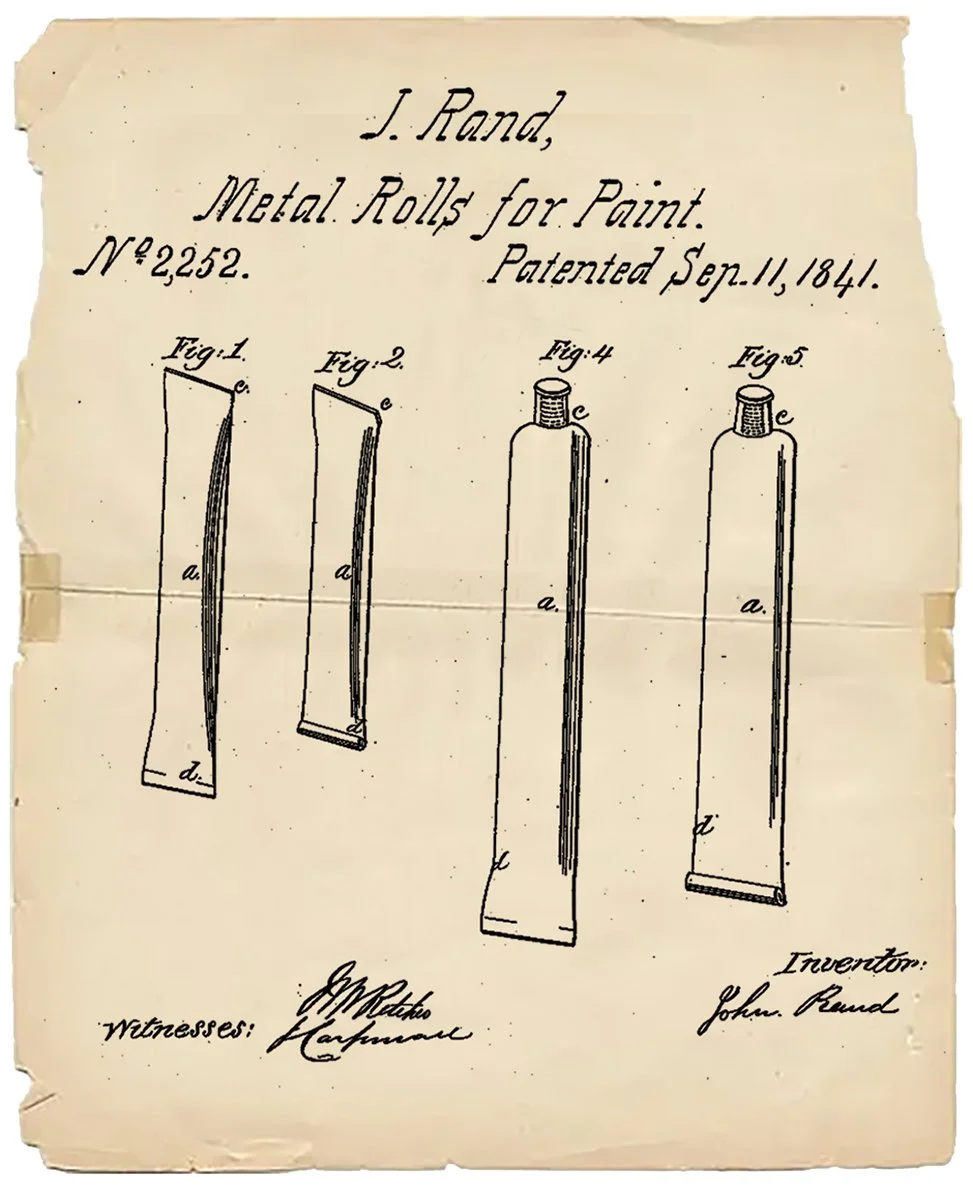
Tin tubes solved the bladder problem. Paint lasted longer. Color became more consistent. Synthetic pigments expanded the paint color spectrum. New techniques emerged as artists approached their canvases differently. Most importantly, artists were freed from their studios.
An innovation in packaging outsourced non-core production tasks and gave artists back their time.
When Tools Change, Movements Follow
The paint tube didn’t just improve efficiency—it changed the art itself.
Portability triggered adjacent innovations: foldable easels, compact kits, mobility-driven workflows. Painting became less about controlled studio environments and more about light, immediacy, and observation.
Claude Monet’s Impression, Sunrise—painted at the port of Le Havre— was a symbol of a new way of seeing and capturing light and is famous for giving the Impressionist movement its name.
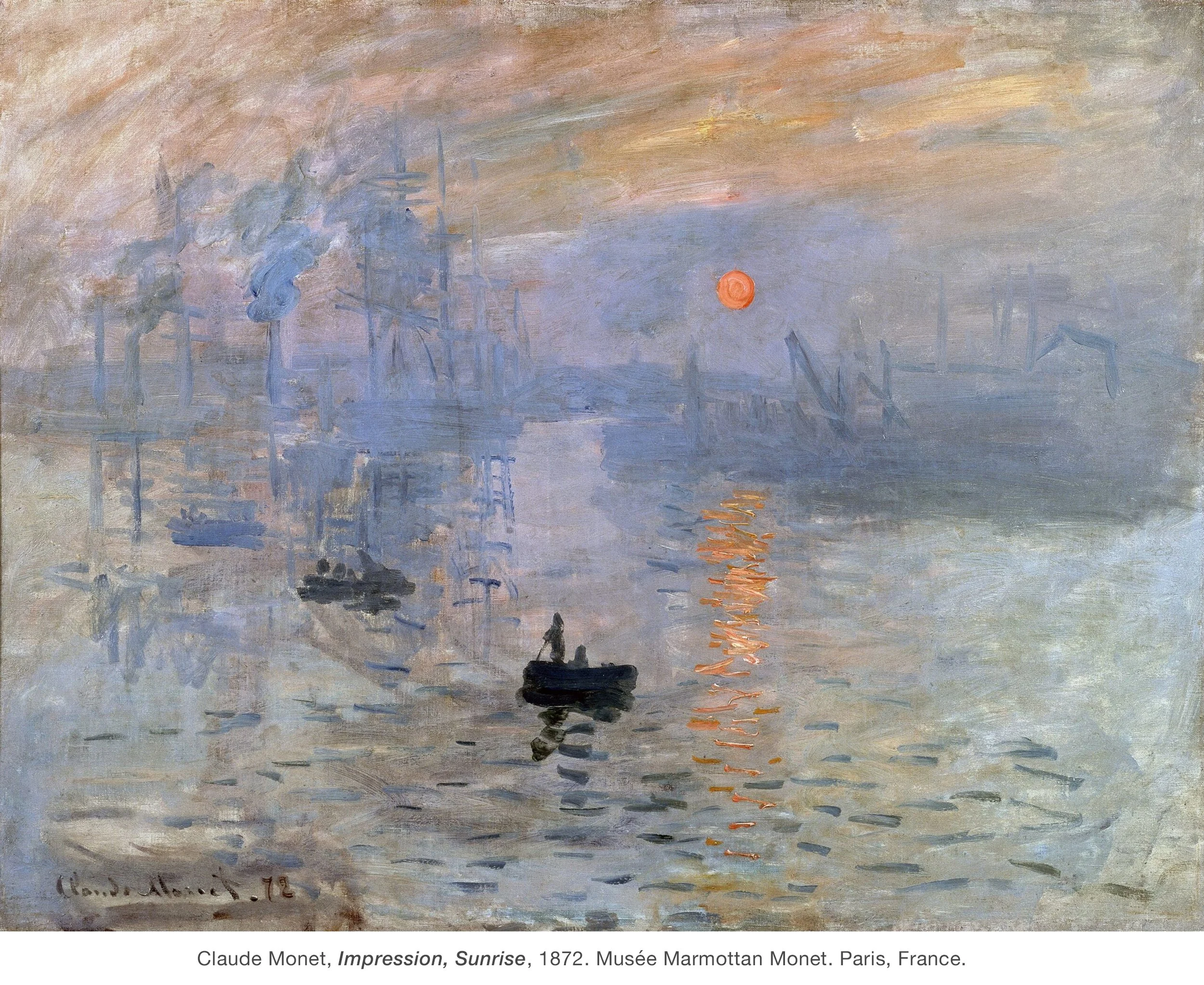
Tubed paint expanded what artists could do with their time, focus, and ideas.
AI sits in that same space today. Not as a threat. As leverage.
Like the tin tube, AI removes friction. It handles prep work, rough drafts, and versioning—freeing space for concept, craft, and judgment. It forces harder strategic questions:
Where does value sit when execution is no longer the bottleneck? How should teams be structured?
What becomes differentiating?
AI is a talent force multiplier. But what it really forces is clarity. This isn’t a tooling conversation. It’s ultimately an org design conversation.
The artists who embraced the tin tube weren’t purist grinding pigments to preserve tradition. They used reclaimed time to explore new directions and movements. AI gives us speed and consistency. But its real value is what it gives back: time.
Time to think more deeply. Time to explore more options. Time to refine instead of rush.
Embracing new technology has always been at the heart of creative evolution.
The Creative + AI Playbook
Here are four principles I recommend for creative leaders navigating through the technological shift:
1. Treat AI as Infrastructure
AI is a utility layer that supports thinking. It is not a substitute for strategic insight or creative leadership.
2. Invest in Judgment
When content becomes abundant, discernment becomes scarce—and valuable. Taste, curation, and contextual intelligence are the new differentiators.
3. Use Speed to Explore, Not to Settle
Acceleration should expand possibility, not compress ambition. Faster iteration must produce better thinking—not just more output.
4. Lead with Humanity
Empathy, ethics, lived experience, and cultural fluency are advantages machines cannot replicate. They must become central, not peripheral.
The leaders who will thrive in the Creative + AI era won’t be the fastest adopters. They’ll be the clearest thinkers about where human judgment belongs.
The question isn’t whether you’ll use AI. It’s whether you’ll use it to elevate your team — or just increase the noise. The creative leaders being hired right now aren’t the best prompt writers. They’re the ones who understand where human judgment multiplies value.